What gets a room tidied?
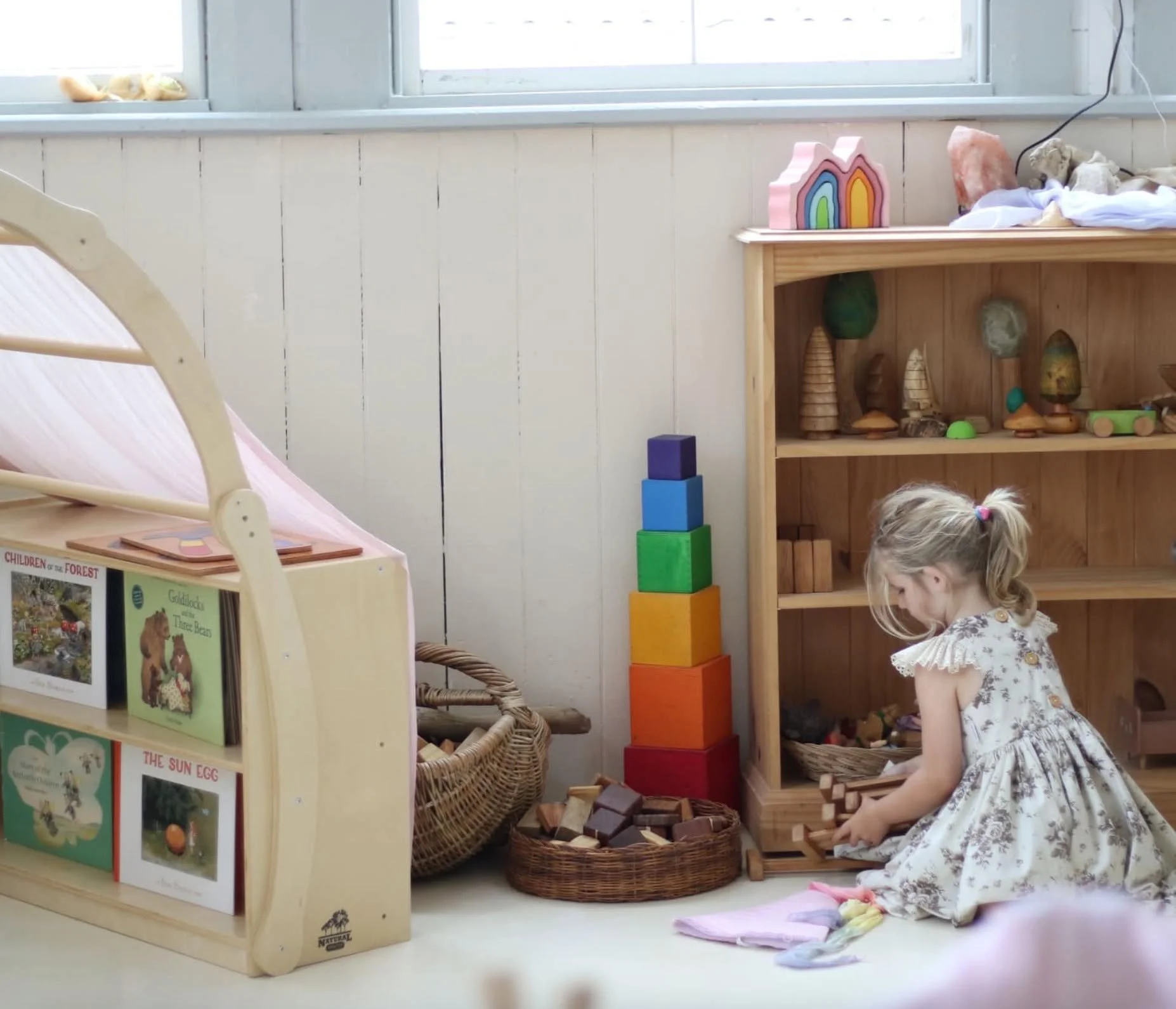
At the end of morning play, someone starts singing “round, round, round, a swish, swish, swish swish - tidy up our home” Nobody has given an instruction, exactly. But plates and cups start finding their way to the bench, apple cores go into the compost bin, a table gets wiped, chairs get stacked, and somewhere in there a broom comes out for under the table — with a different song for the gnome who apparently needs chasing out too: “I met a little dusty gnome, who said it's time to tidy up. A round, round, round, a swish, swish, swish. ” A child who was deep in a game a moment ago is often, by the end of the song, carrying a chair.
This is what guidance mostly looks like at Willowsong: not instruction, but rhythm and image, repeated so often that a child doesn't need telling — they just know what tidy-up time is, the way they know what morning tea is. Nobody stands over a three-year-old explaining why the compost bin exists or how a broom works. A kaiako simply does it, most days, at the same point in the day, usually singing while they go, and children join in because that's what everyone is doing.
The gnome isn't just a bit of whimsy, either. Giving a task a small character to imagine — a dusty gnome who needs sweeping out, rather than a rule about tidiness — is a deliberate way of meeting young children at this age: through image and story, not explanation. A child who couldn't yet follow ‘please tidy the floor because mess is unhygienic' can absolutely follow a gnome who needs chasing out with a broom.
We've come to believe, partly from watching this work and partly from our own reading, that reasoning genuinely doesn't reach a young child the way rhythm and image do. Explaining the theory of tidiness to a three-year-old rarely produces a tidier three-year-old. Singing the same two songs at the same point in the day, for months, usually does.
There's something else in it too. A child stacking a chair because the song says so isn't just learning where chairs go. They're absorbing an idea about shared spaces — that a home, or a room, gets looked after by everyone in it, without anyone being singled out or told off. The song does that work quietly, in a way a direct instruction rarely manages.
We don't have this fully figured out, and plenty of days the tidy-up song gets sung to a room that stays fairly untidy regardless. But the rhythm of it, held steadily over a long time, seems to be doing something more lasting than any single tidy room ever could.