Two Horses, Three Chickens - A Story About ‘Math’ at Willowsong
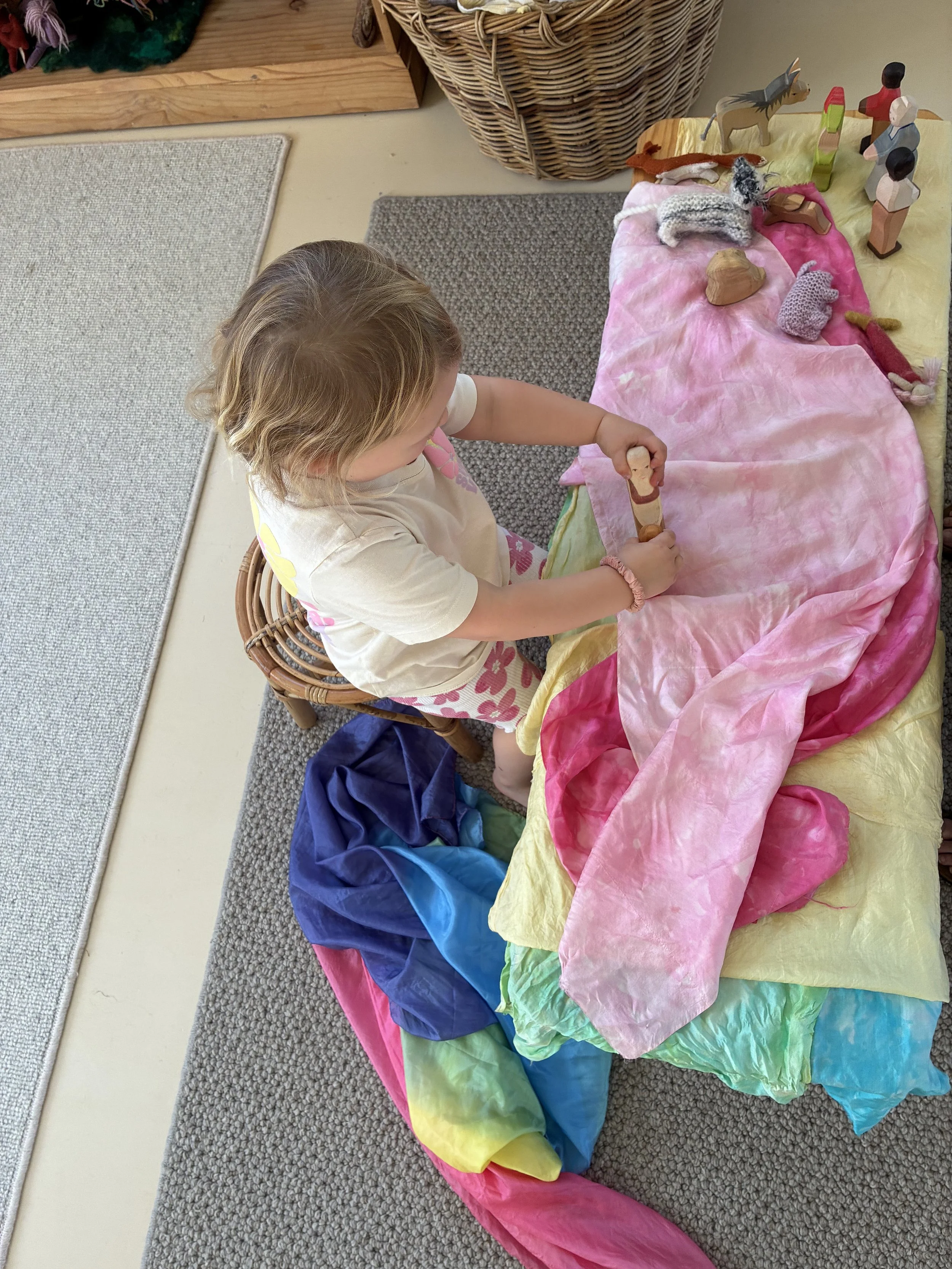
A child sits down and starts telling a story about a farmer and his animals — two horses in the top paddock, three chickens pecking near the shed, a pig wallowing by the gate. Nobody's asked her to count anything, and there's no worksheet in sight. But she's using numbers freely and correctly inside her own story, attaching a number to something she can actually picture, long before anyone's sat her down for a maths lesson.
It's easy to assume 'real' maths starts later — with numbers on a page, structured lessons. From what we've noticed, a lot of it seems to start exactly like this: quietly, inside a story a child tells herself, long before anyone calls it maths.
The same thing happens elsewhere in the day. Setting the table works a similar way: how many bowls, how many spoons, one for each person sitting down. Sorting stones by size in the garden is an early, physical form of classifying. Pouring water from one container to another is a first real encounter with volume.
None of it needs a story to work, but a child's own storytelling seems to make the counting almost invisible — she isn't trying to count, she's just picturing a farm. None of it is dressed up as a lesson, and that seems to be rather the point.
Ideas that arrive through a story a child loves, or a task they actually care about, seem to take root more securely than ideas introduced through formal instruction before a child is ready for them. This is also roughly what we've taken from our own reading on early academics over the years — that hands-on, lived experience in the early years matters more for later learning than rushing into abstract lessons does. We're not researchers ourselves, so we hold that lightly, but it matches what we tend to see in the children in front of us too.
By the time a child is ready for numbers on a page, they've usually spent years counting horses and chickens, sorting stones, and setting a table for the right number of people. The abstract symbol, when it finally arrives, has something real underneath it to attach to.