Five Strings, No Wrong Note
Some mornings, one of the more contented sounds in the room isn't silence at all — it's a child at the harp, drifting a finger across the strings with no tune in mind and no hurry to find one. Nothing is wrong. Whatever they reach for, it comes back sounding settled and whole.
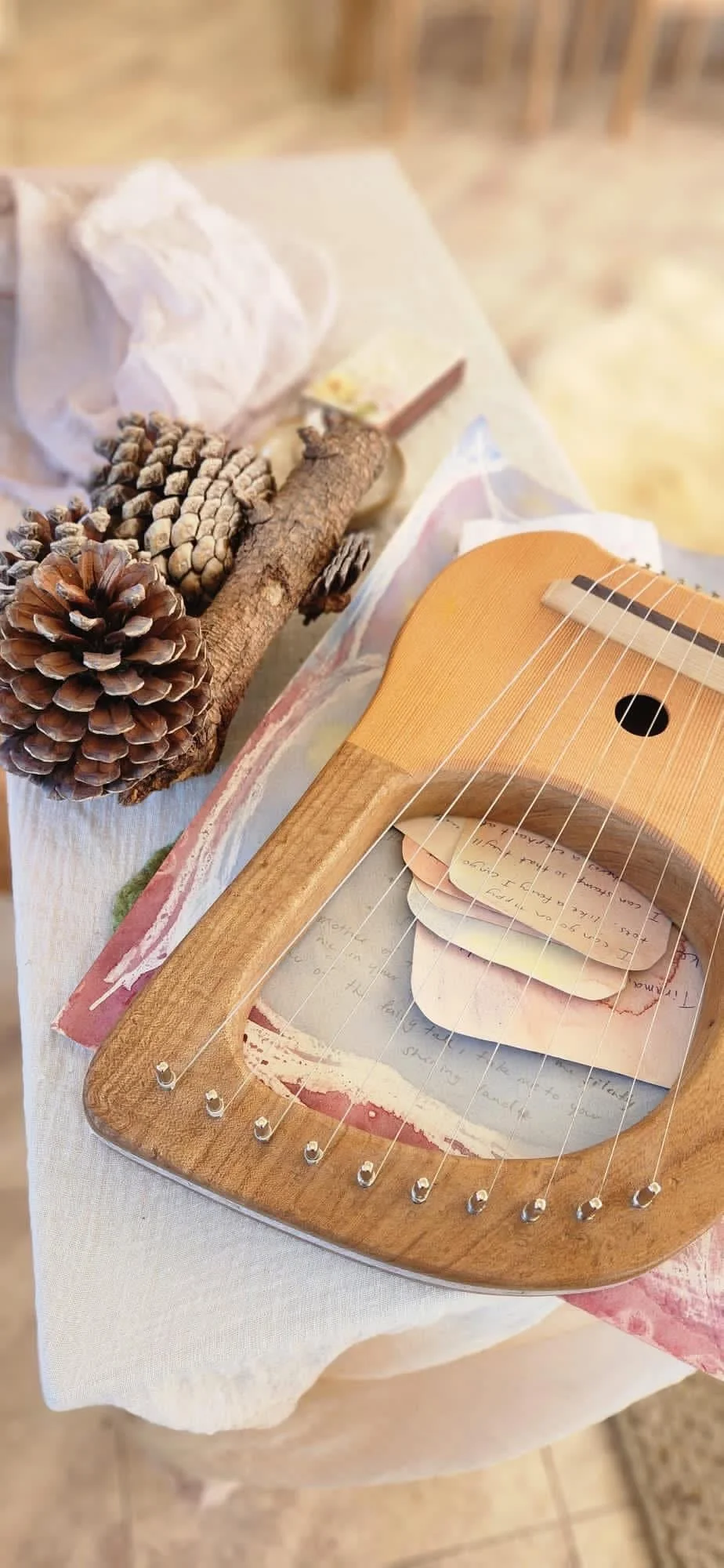
That's not the child's doing, particularly — it's the instrument. Our harp and glockenspiel are strung to five notes rather than the usual seven, with the two notes most likely to clash left off entirely. There's nothing on the instrument that can sound wrong, so there's nothing for a small hand to get wrong, either.
Compare that with almost everything else a child hears. Most music resolves — it moves toward a note that feels like home, and part of the listener waits for it to arrive and settle. That's a fine quality in music, but it asks something of us too: a small, ongoing judgement about whether a piece has got where it's going yet or is still on its way. It's not far off the sorting a child is already doing constantly, everywhere else in their day — the right shape, the right word, the right way to behave.
A five-note scale skips all of that. With nowhere fixed to resolve to, there's nothing to wait for and nothing to get right, so the sound simply floats, open-ended. Rudolf Steiner had a phrase for this particular quality — the "mood of the fifth" — and thought it matched, quite closely, how a young child experiences everything else around them too: unhurried, still whole, not yet sorted into finished and unfinished.
It isn't offered only for how pleasant it sounds, though it is that. It matters more because a stretch of time with nothing to get wrong is genuinely rare in a small child's day, and worth holding onto alongside everything else that does have a right answer to find.
A child doesn't need to be in tune, or even sing at all, for any of this to work. Some children sit right out of the morning singing for weeks — watching, mouthing along, going quiet at the parts that feel too exposed — and then, without any particular occasion for it, join in properly one ordinary morning as though they'd always been singing.
And when the pitch slides, the words run out, the verse stalls halfway — nobody stops to correct it. A kaiako will usually just keep going, quietly, leaving the door open for the child to step back in whenever they're ready, that day or another one.
None of this is really about whether a child can hold a tune. It's about a small, early confidence that a voice is worth using at all — well before anyone has told them whether it's the right one.