A Page Full of Colour
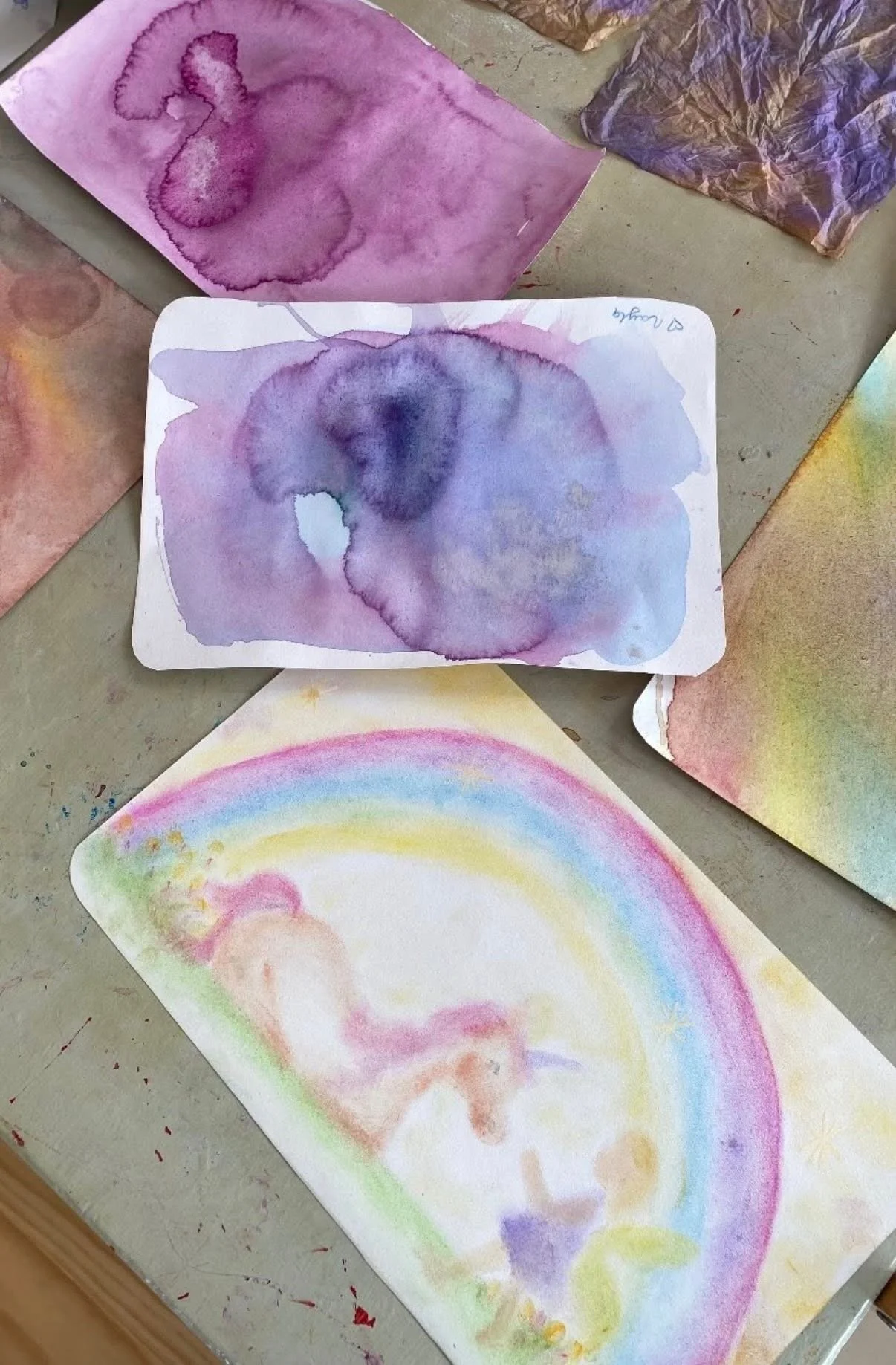
When it's time to paint at Willowsong, the table fills up with jars of colour, a jar of clean water for rinsing brushes, and a small sponge at each place. That same sponge is used to wet the paper before painting begins, smoothed damp onto a board so that by the time a child sits down with a brush, everything in front of them is already wet. There's no pencil sketch to fill in and no picture in mind to aim for. Just colour, and what it wants to do on a wet page.
This is wet-on-wet watercolour painting, and it's one of the quieter, more particular things we do at Willowsong. The paint meets wet paper rather than dry, so a stroke of colour never stays a neat little shape — it spreads, blurs, and reaches toward whatever lies next to it on the page. Where two colours happen to meet, a third arrives on its own, without anyone mixing it on purpose. It's less like drawing and more like watching the weather move across a page.
There's no fixed palette or picture in mind — a child works with whatever colours are out that day and discovers what happens between them. Painting this way isn't really about producing a picture at all. It's an experience of colour itself: what one colour feels like next to another, how a single colour can fill a whole page in a hundred different moods depending on how much water is behind it. Goethe, whose colour theory Waldorf education draws on, thought of colour as something felt as much as something seen — not just a wavelength of light, but a small emotional weather system all its own. You don't need to know any of that to notice a child go quiet and absorbed over a page that's slowly filling with colour.
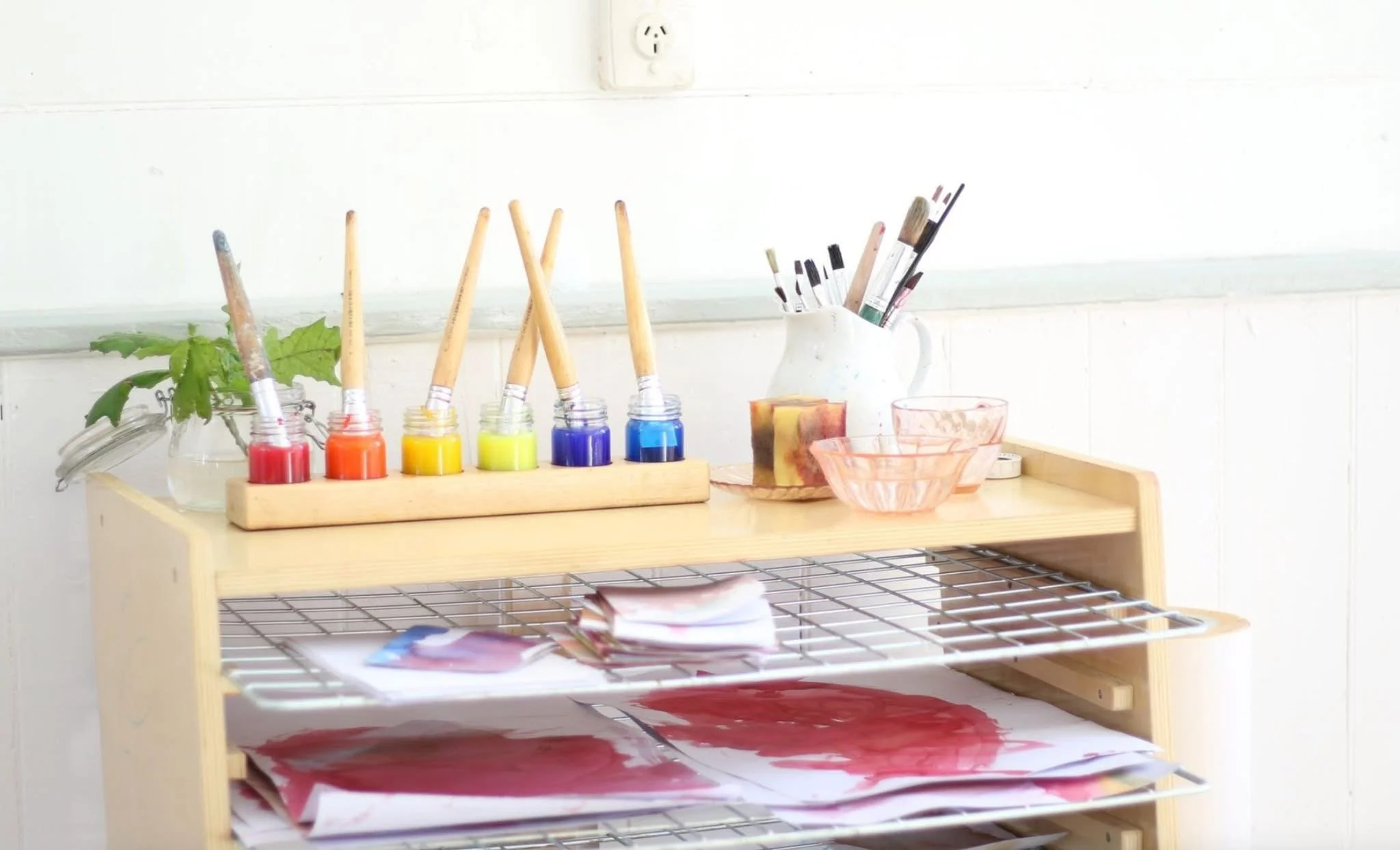
Some paintings stay luminous and clear. Others get painted over and over until they're a deep, muddy sort of brown, and that's exactly as it should be — the child doing that is still right in the middle of the experience, even if the page itself doesn't look like much by the end.
This isn't part of our day simply because painting is a lovely thing to offer children. It's part of our day because working with colour this way — slowly, without a fixed outcome, guided by feeling rather than a picture in mind — builds exactly the kind of unhurried attention and quiet absorption we hope to grow in every part of a child's day.
The paintings dry flat on their boards, sometimes for the length of a good long lunch, before they're ready to come home with your child — a little water-softened and imperfect, and exactly what a page full of colour is meant to look like.