The Quiet Work Beside Them
Walk into the kindergarten on any given morning, and you might find a kaiako mending a torn sleeve at the small table, raking leaves into a pile by the fence, or cutting apples into a bowl for morning tea. Children move around this work rather than through it. Some glance over. Some settle in close, watching without a word. Some don't come near it at all, deep in their own play across the room.
Nobody has called the children over. Nobody is teaching a lesson.
It would be easy to assume that "handwork" for young children means a craft table — pom-poms, finger-knitting, a weaving frame, something with a clear beginning and a finished thing to take home. Plenty of early childhood settings offer exactly that, and it isn't hard to see why: it looks purposeful, it photographs well, and it gives every child something to show at pick-up. But a three-year-old asked to follow steps toward someone else's idea of a finished object is being asked to do something they aren't yet built for. The instruction itself can call on capacities — sitting still, following a sequence, producing to a standard — that haven't fully arrived yet in a child under seven.
What we mean by handwork at Willowsong is closer to the older, plainer sense of the word: the work of the hands, wherever it turns up. Rolling dough. Digging in the sandpit. Buttering bread. Carrying a full cup without spilling it. Building a tower and watching it fall. Picking flowers for the nature table. None of it is instructed. All of it strengthens the same small muscles, the same patience, the same sense of a task through to its end.
Sweeping a floor is not a handwork lesson. It's simply sweeping. Mending a sleeve is not a craft activity. It's simply mending. The kaiako doing it isn't performing an activity for the children's benefit — she's getting the floor swept, the sleeve mended, the bread made. That the children are nearby, absorbing it, is real and important, but it isn't the point of the sweeping.
This matters because of how young children actually learn in these years: not by being shown what to do, but by imitation. A child under seven takes in the world less through explanation and more through what they watch adults doing with real focus and real purpose. When a kaiako sits with genuine, unhurried attention to a piece of real work, something of that quality — the settled, purposeful will behind it — passes to the children close by, whether or not a single one of them picks up a needle or a peg themselves that day.
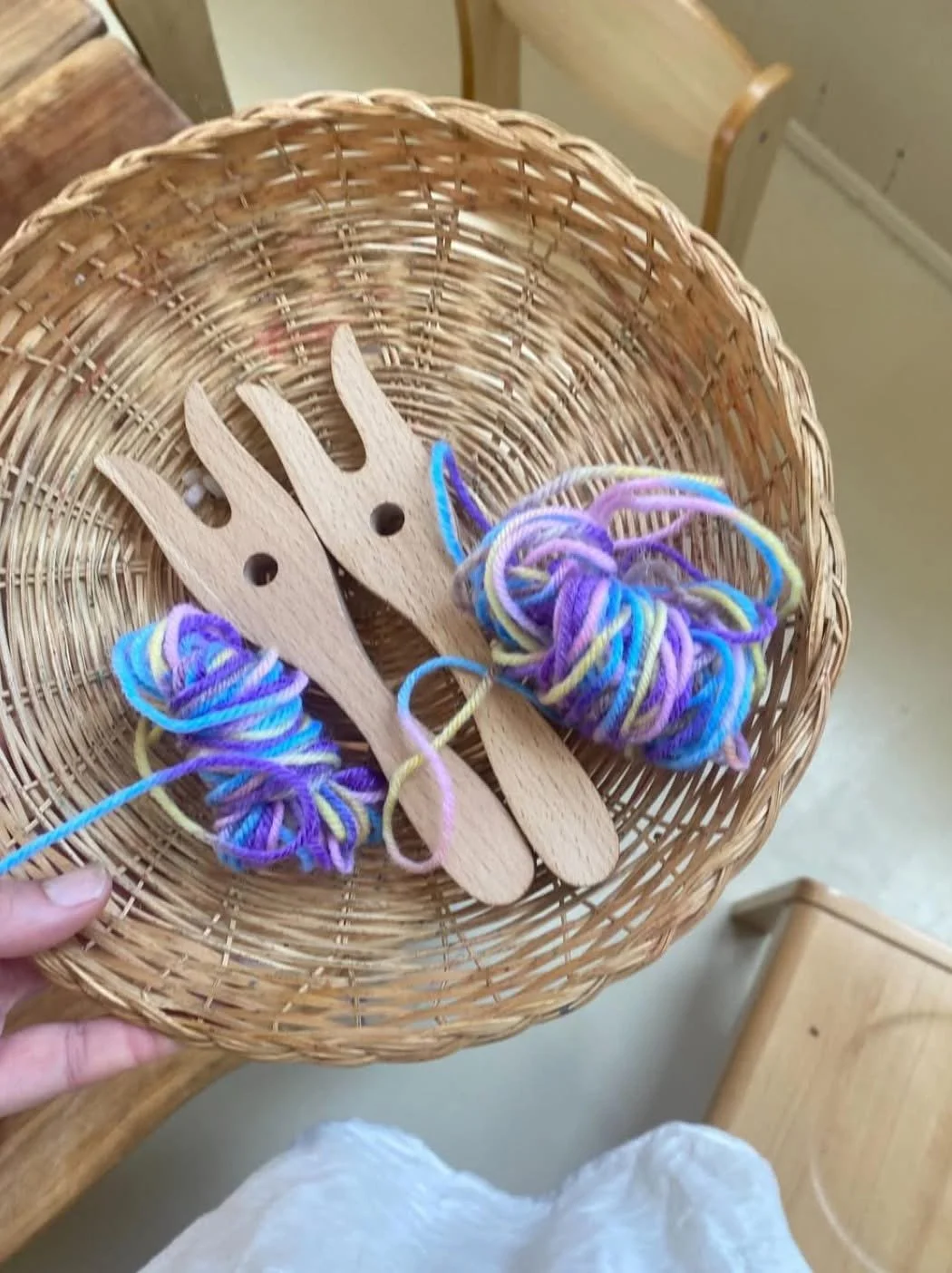
Michael Howard, in his book on the Waldorf approach to early education, put it plainly: "In early childhood we do not 'teach' the arts and crafts to the children so much as we create opportunities for children to be exposed to and engage in the realm of art as a natural part of everyday life." Nobody is assessing a stitch count. There's no reward for joining in, and no cost for not. A basket of real materials — wool, wooden pegs, a darning needle blunted for small hands — sits within reach, and a child comes to it when they're ready, on their own terms, and takes it in whatever direction their own play suggests.
That's also why it matters so much what the adult is actually doing while children play nearby. Real handwork — kneading, mending, raking leaves, cutting fruit, gardening — has a kind of hum to it that children settle into. A phone, a screen, even a book, pulls an adult's attention somewhere else entirely, and children feel that absence immediately, even without being able to name it. The kaiako's hands being genuinely busy with something real is, in its own quiet way, part of what holds the room steady enough for deep, unhurried play to happen at all.
None of this is about producing anything. There's no expectation that a child leaves kindergarten each day having made something. Some children spend a whole term watching before they ever pick up a needle themselves, and that watching is not wasted time — it's exactly the kind of absorption this age is built for. When a child does eventually join in, gets a knot wrong, or gives up on a stitch after two tries, nobody rushes to fix it for them or to talk them through the correct technique. A kaiako might simply stay close, keep working on her own piece, and let the child return to theirs in their own time, or not at all that day.
What a child carries forward from years like this isn't a finished basket of things they've made. It's something quieter and further-reaching: the sense that real work is worth being near, that grown-ups do purposeful things with their hands rather than being pulled away by other things, and that they themselves are capable of joining in when they're ready — not because they were told to, but because they wanted to.