Little Hands, Big Magic
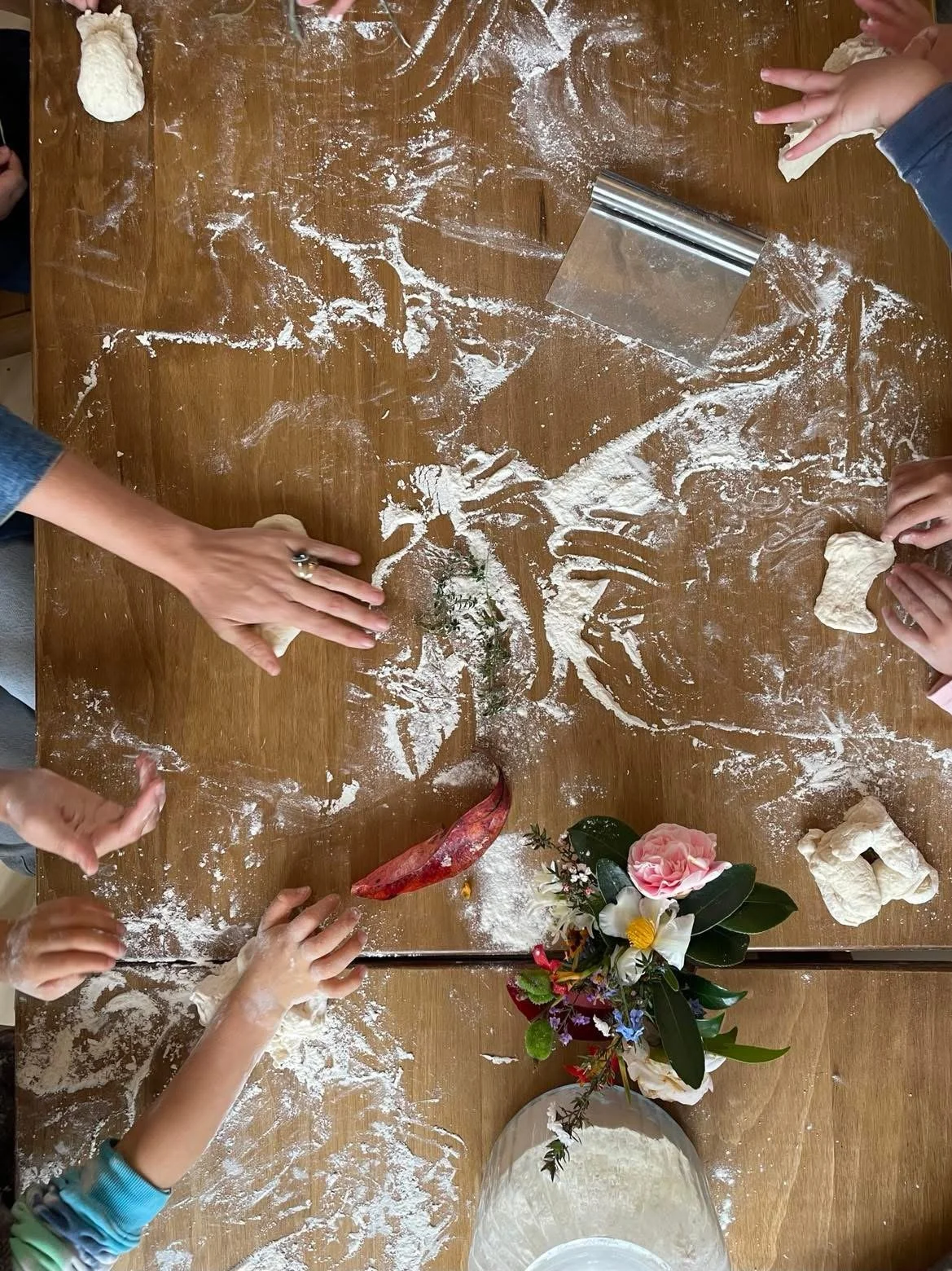
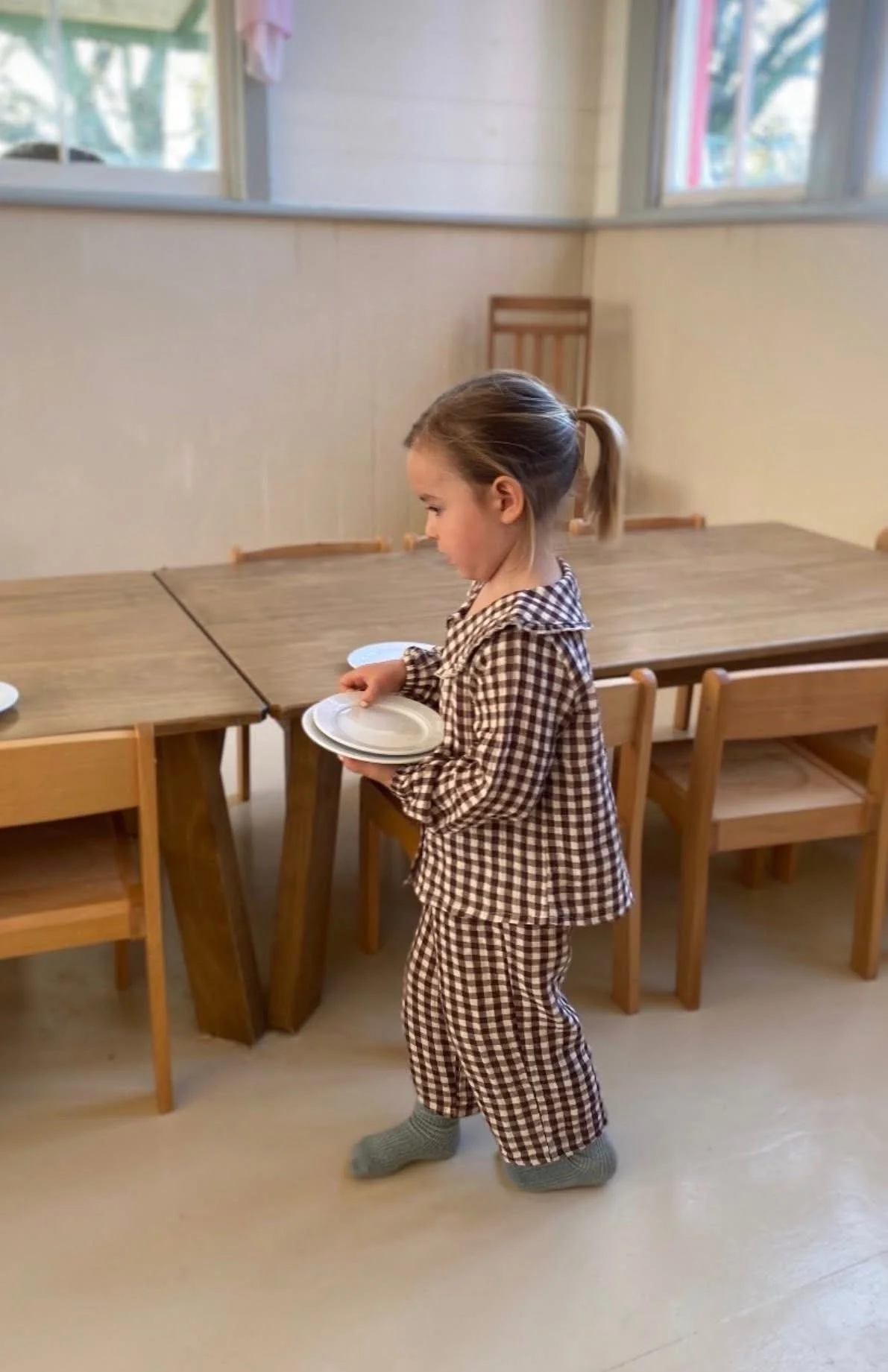
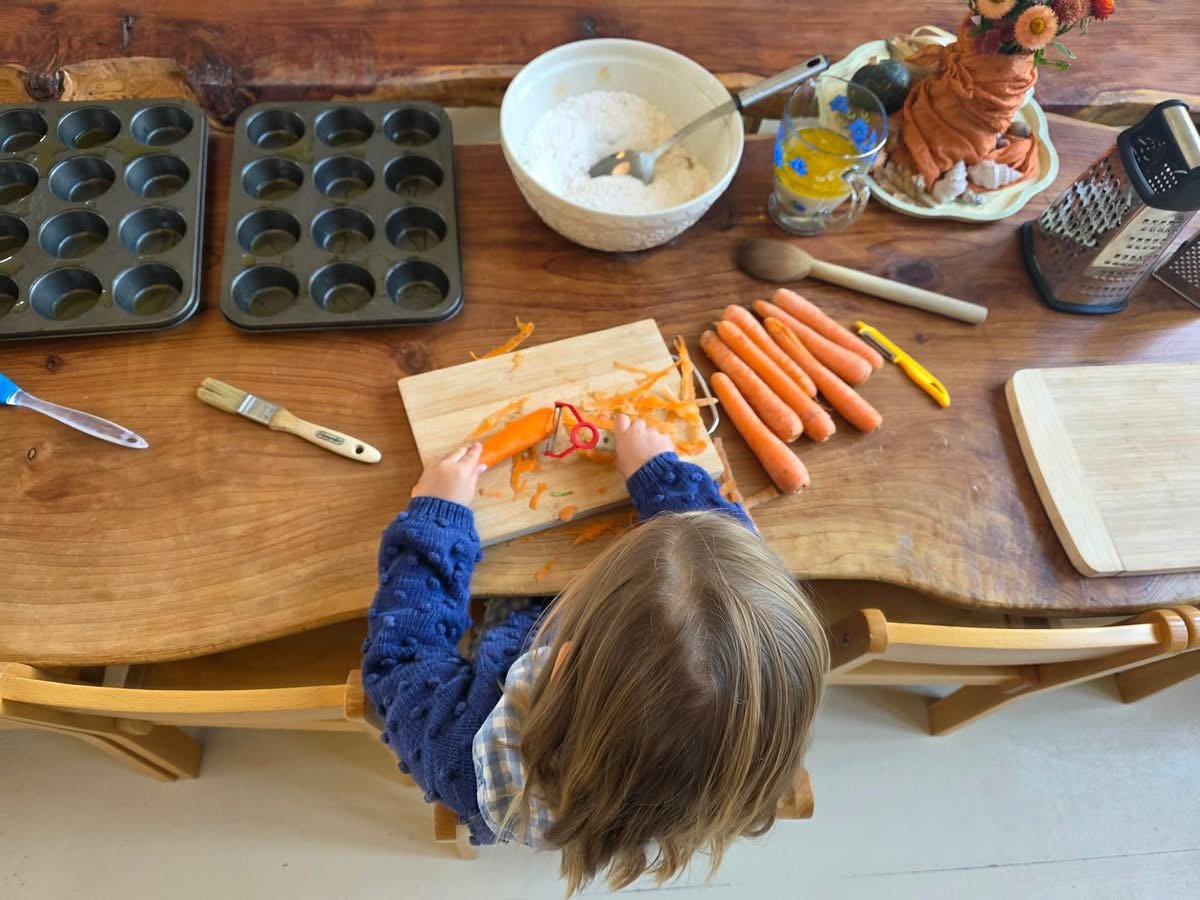
Somewhere at Willowsong this week, a child is up to their elbows in bread dough that won’t quite behave. Somewhere else, a jug of water is being carried very, very carefully across the room, with the sort of concentration only a two-year-old can bring to a task. A peg is being wrestled onto a line. Down by the garden, small hands are cracking walnuts into a bowl, one at a time, while a ball of wool slowly takes shape as it’s wound, round and round, between someone’s outstretched arms.
It isn’t so long ago that tasks like these were simply part of growing up, asked for and expected. That’s less true now. Zips have mostly taken over from buttons. Velcro has crept in over laces. So much arrives finished and ready, and there are fewer everyday moments left that ask small hands to do the finishing themselves.
This isn’t a case for turning every child into a little crafts person. It’s more a gentle noticing of what tends to get skipped over as the world moves so quickly around our little ones. Handed something real, with real texture and real weight, plenty of children haven’t yet grown the confidence, or the fine motor control, to see it through easily. That’s not a mark against any child. It’s simply what happens when a skill isn’t asked for very often.
There’s something bigger held inside these small tasks, too. A child is also building a relationship with difficulty, and with the slow, patient process of learning something new. It’s easy for a task to be set down the moment it feels hard or boring — and when that happens, there’s rarely been enough time to reach the small sense of accomplishment waiting on the other side.
The most visible part of this is fine motor development — the strength and control little fingers need for scissors, pencils, buttons, and one day, handwriting. Our kaiako notice, kindly and without any alarm, that this control tends to potter along a little slower than it once did.
But the deeper loss sits underneath the skill itself. When dough won’t quite come together, when water spills before it reaches the plant, when a piece of wool won’t wind evenly — something is happening in that small moment. The child notices what isn’t working, adjusts, and tries again, sometimes many times over before it comes right. Alongside the practical skill, they’re gathering patience, care, sequence, and judgement, almost without knowing it.
Together, these quietly build something more: confidence. Not just the feeling of being able to do a thing, but the steadier knowing that if something isn’t working yet, it will — with time, and by staying gently with it.
Learning isn’t the same as simply being told something. It asks a child to go through an experience — to try, to get it a little wrong, to try again — often returning to the same small task more than once before it settles into place. That process does more for a child than any single fact ever could. A good early childhood isn’t measured only by what a child can already say or name. It’s measured, just as much, by the small qualities and judgement they’re quietly gathering, hour by hour, ready to carry with them.
There’s an old thread in Waldorf thinking that ties hands, heart, and head together — the idea that a child’s education is happening at the same time in their fingers as it is in their feelings and their thinking. We don’t need anyone to tell us that exactly, but it’s rather lovely to watch it prove itself true, one wobbly stitch and one wonky loaf at a time.
This is part of why bread-making, gardening, and pegging out the washing turn up so often in a Willowsong morning, alongside wool, wood, water, and hands in the whenua. As the seasons turn, the same small hands might be rolling a beeswax candle, weaving a daisy chain, or making something simple for one of our festivals — Matariki, Whitsun, our Spring Fair. These moments aren’t part of our day simply to be different from mainstream childcare, or to offer a lovely alternative to it. They are part of our kaupapa because they are core to the education.
It’s easy to see only the lovely, dusty-with-flour surface of it all, and miss how thoughtfully it’s woven into a plan for the whole child — physical, emotional, and, in time, of the mind.
Kneading bread is not Waldorf. It’s simply baking. But we return to it, and to wool, water, and wood, again and again, because these ordinary materials gently build a child’s hands while they’re still forming the foundations for everything that follows — including, eventually, holding a pencil with ease. It isn’t a lovely add-on to the day. It’s part of the quiet, core work.
Each of these activities earns its place not because it’s a nice thing to do with children, but because it offers something no worksheet quite can. Ask any of our kaiako, and they may share a memory of a child whose hands wouldn’t quite cooperate at first — dough that wouldn’t hold together, wool that kept slipping loose — who felt like giving up within minutes of starting. And then, some weeks later, arrived one morning having made the same thing at home, quietly proud of what their own hands could now do.
Steiner once wrote something about practical work that has always stayed with us:
“It is a fact that a child who has cut grass with a sickle or mown it with a scythe, a child who has made a furrow with a little plough, will turn into a different person from one who has not done these things. Quite simply, the soul element is changed. Abstract lessons in manual skills are not really a substitute.”
When things don’t go quite right for a child at kindergarten— the tower falls, the stitch drops, the dough tears — we try not to swoop in and fix it for them, and we try not to let them wander off from it either. A kaiako might sit alongside them for a moment, offer a small distraction, and gently bring them back to the mahi with support. Some children don’t enjoy every part of it. They still learn from it, softly, in their own time.
We’d love for children to learn, too, that things can be mended rather than simply replaced — a torn sleeve, a wobbly block tower, a favourite toy. So much around us is simply replaced these days. But there’s an aroha in the quiet work of fixing something with your own hands, and it grows a child in a way that’s hard to put into words.
None of this is really about a perfectly kneaded loaf or a flawlessly swept path. It’s about a child discovering, gently and again and again, that they can meet something difficult, stay with it a little longer, and come out the other side feeling just a bit more capable than when they started. That’s a quiet kind of confidence — and one we hope they carry with them long after they’ve left our gate for school.